Beyond the Hype: The AI Conferences That Matter in 2026
A practical guide to the year's most impactful artificial intelligence events, from technical deep-dives to ethical cross-sector dialogues.
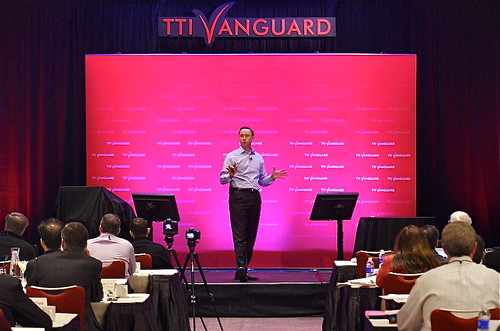
If you blinked, you might have missed it: 2026 is not the year AI is coming—it is the year AI is here, embedded in everything from hospital diagnostics to city traffic grids. The conference circuit has responded in kind, with events that are less about speculative demos and more about hard trade-offs: how to deploy large language models at scale, how to audit algorithmic bias in real time, and how to navigate a regulatory landscape that is finally catching up to the technology.
For professionals who need to separate signal from noise, here is a curated look at the artificial intelligence conferences and events that define 2026—and why each one matters beyond its agenda.
The Landscape: Why 2026 Conferences Are Different
Three years ago, AI conferences were dominated by breathless announcements of model size and benchmark scores. Today, the conversation has matured. According to the 2026 edition of the Splunk conference guide, the focus has shifted to "operationalizing AI—making it reliable, explainable, and secure in production environments." This is not a minor shift; it reflects a broader industry recognition that the hardest problems are not building models, but deploying them responsibly.
Meanwhile, the role of AI and machine learning in 2026, as explored by Global Banking & Finance, is increasingly about "smarter tools to ethical innovation." Conferences now routinely feature tracks on AI governance, workforce retraining, and cross-sector collaboration—topics that would have been relegated to side panels just a few years ago.
The Must-Attend Events of 2026
AI World Summit (Boston, March 10–12)
This flagship event has evolved from a showcase of bleeding-edge research into a practical symposium for enterprise deployment. The 2026 edition features a dedicated "Model Ops" track, where engineers from financial services and healthcare share case studies on monitoring drift, managing cost, and ensuring compliance. A standout session this year: "Running a 70B-Parameter Model on a Single GPU: Lessons from Edge Deployment." If you are a technical lead evaluating infrastructure trade-offs, this is your conference.
The AI Ethics & Governance Forum (Brussels, April 22–24)
With the EU AI Act now in full enforcement, Brussels has become the de facto capital of AI regulation. This forum brings together policymakers, legal scholars, and C-suite executives to debate the practical implications of compliance. The 2026 agenda includes workshops on auditing high-risk systems and a mock regulatory hearing that tests how companies would defend their models under scrutiny. It is less about theory and more about the fine print—essential for anyone responsible for risk and compliance.
NeurIPS 2026 (Vancouver, December 8–14)
The perennial heavyweight of AI research remains the place to see what is coming next. This year's program emphasizes reproducibility and robustness, with a new "Benchmark Integrity" workshop addressing the growing problem of dataset contamination. The poster sessions are as competitive as ever, but the real value is in the hallway conversations and late-night hackathons where the next generation of architectures—think liquid neural networks and neuro-symbolic hybrids—get their first public tests.
AI & Machine Learning in Healthcare Summit (San Francisco, June 16–18)
Healthcare has become one of the most consequential—and fraught—domains for AI deployment. This summit zeroes in on clinical validation, FDA clearance pathways, and the ethical minefield of predictive diagnostics. A 2026 highlight: a joint session with radiologists and model developers who are building systems that can flag early-stage pancreatic cancer from CT scans, a condition that currently has a five-year survival rate below 10% when caught late. The takeaway here is that conference conversations are moving from "can we build it?" to "should we deploy it, and under what safeguards?"
The Responsible AI Conference (London, September 8–10)
Now in its fifth year, this event has matured from a niche gathering into a mainstream fixture. The 2026 theme is "Accountability at Scale," with panels on algorithmic impact assessments, whistleblower protections, and the emerging field of AI auditing as a profession. A notable addition: a "Red Team" challenge where attendees attempt to break deployed systems in controlled environments, surfacing failure modes before they cause real harm. For product managers and policy leads, this is where the rubber meets the road.
Why These Conferences Matter Beyond the Agenda
The common thread across these events is a shift from possibility to responsibility. In 2026, the AI community is grappling with questions that are less technical and more sociological: Who gets access to these tools? How do we prevent them from entrenching existing inequalities? And what happens when a model's output cannot be explained, even by its creators?
Consider the example of a predictive policing algorithm deployed in a mid-sized city. At a 2023 conference, the conversation might have focused on its accuracy. At a 2026 conference, the conversation includes its disparate impact on marginalized neighborhoods, the legal liability of the city, and the audit trail required to prove fairness over time. This is progress.
Navigating the Conference Circuit: A Professional's Strategy
With dozens of events vying for attention, how should a busy professional choose? A few rules of thumb:
- Match the event to your maturity level. If your organization is still exploring AI, a broad conference like AI World Summit offers foundational content. If you are deep in deployment, specialized events like the Healthcare Summit or the Responsible AI Conference will yield higher ROI.
- Prioritize workshops over keynotes. The real learning happens in hands-on sessions where you can ask questions and work through problems. Look for events that offer extended tutorials or lab-style formats.
- Network across sectors. The most valuable conversations often happen between people who do not share a job title. A data scientist at a bank and a policy analyst at a regulator can learn more from each other than from a third keynote on transformer architectures.
- Follow the regulatory calendar. Events in Brussels and Washington, D.C., are increasingly essential for understanding the compliance landscape. If your product touches EU citizens, the Brussels forum is non-negotiable.
The Takeaway: Conferences as Reality Checks
In a field moving at breakneck speed, conferences serve a critical function that no blog post or webinar can replicate: they force a pause. They bring together diverse voices—engineers, ethicists, regulators, end users—and demand that they reckon with the same questions. The best events of 2026 are not those with the flashiest demos or the biggest names; they are the ones that leave you with more questions than answers, and a clearer sense of what you need to build next.
As Artificial Intelligence 2026 organizers put it, the goal is to "explore the latest advancements" while also grounding them in real-world constraints. That duality—ambition tempered by accountability—is the defining characteristic of this year's conference season. Whether you are a CTO evaluating a new platform or a product manager designing a feature, the conversations you have at these events will shape the decisions you make for the rest of the year.
The future of AI is not being written in a lab; it is being debated in conference halls, workshop rooms, and coffee queues. Show up prepared to listen, challenge, and be challenged. That is the only way to stay ahead.


