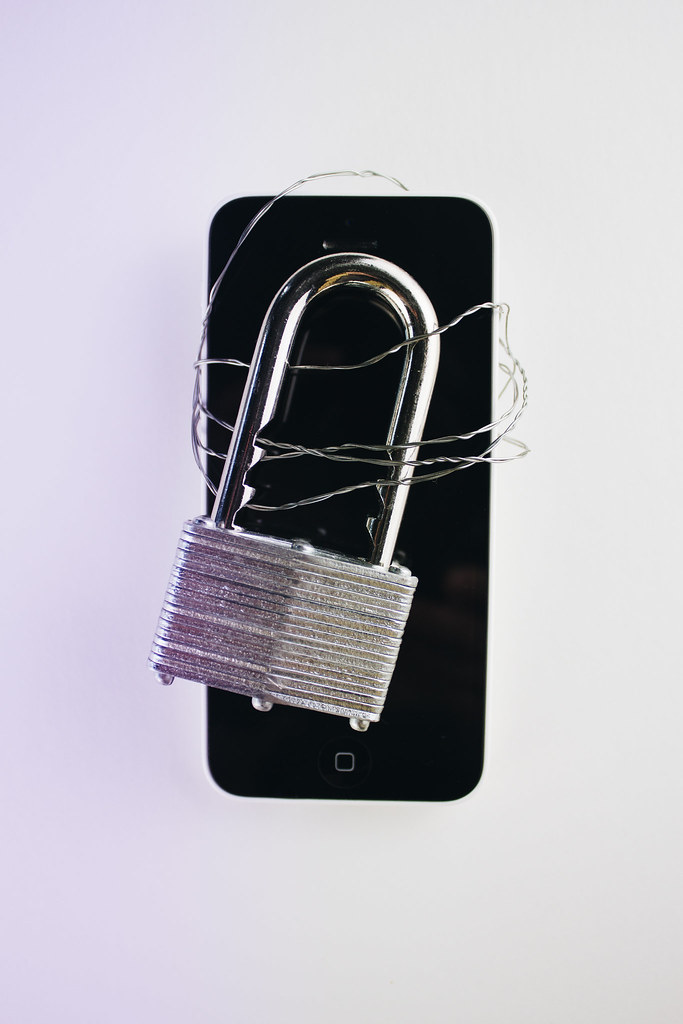
The $74 Billion Ransomware Clock: Why 2026 Is the Year It Gets Worse Before It Gets Better
New research projects ransomware damages will hit $74B by 2026—driven by AI-powered attacks, supply chain paralysis, and a widening gap between defense and offense.

A single email. One overlooked patch. A contractor with weak credentials. That is all it takes for a ransomware attack to turn a company’s data into a hostage negotiation—and its quarterly earnings into a footnote.
Cybersecurity Ventures projects that ransomware damage will reach $74 billion globally in 2026. That figure is not a scare headline; it is the product of compounding trends: attackers are using artificial intelligence to find vulnerabilities faster, targeting the soft underbelly of supply chains, and demanding ransoms that now average well into six figures. To understand why that number is real—and what it means for professionals outside the security team—we need to look past the dollar figure and at the mechanics beneath it.
The AI Acceleration: How Attackers Now Move at Machine Speed
Ransomware is not new, but the tools behind it are evolving faster than most defenses. One of the most significant shifts in 2025 and 2026 is the use of AI by cybercriminals. According to Verizon’s 2026 Data Breach Investigations Report, hackers are increasingly deploying AI to detect software vulnerabilities automatically. Instead of manually scanning for weak points, attackers now feed code into machine learning models that highlight exploitable flaws in minutes.
This changes the economics of cybercrime. A human operator might find one or two zero-day vulnerabilities per month. An AI-driven system can find dozens. The result is a pipeline of fresh attack vectors that defenders have never seen before—and for which no patch exists. Once inside, the same AI can map the network, identify high-value servers, and even draft convincing phishing emails tailored to specific executives.
“AI data breaches are on the rise, with hackers increasingly using the technology to detect software vulnerabilities,” the Verizon report notes. That is not a prediction; it is a description of what is already happening.
Beyond the Ransom: The Real Cost Is Downtime
Most people assume ransomware damage equals the ransom paid. That is a dangerous misconception. The $74 billion figure includes ransom payments, but the bulk of the cost comes from operational downtime, data restoration, legal fees, regulatory fines, and reputational loss.
Consider the attack on Change Healthcare in early 2024. The healthcare payment processor was hit by a ransomware strain that forced it to disconnect systems for weeks. Pharmacies could not process prescriptions. Hospitals could not verify insurance. The company ultimately paid a ransom reported at $22 million—but the downstream damage to the healthcare system was estimated in the billions. That is the pattern: a single breach cascades through partners, customers, and regulators.
By 2026, supply chain attacks have become the norm. Attackers know that compromising one vendor can give them access to hundreds of downstream organizations. The $74 billion projection reflects not just more attacks, but more consequential ones.
The Human Factor Still Matters—But the Stakes Are Higher
SentinelOne’s 2026 data breach statistics identify ransomware, human error, and AI-powered phishing as the top three causes of breaches. Note that human error sits alongside AI-powered attacks. The two are increasingly linked.
An employee clicking a malicious link is not new. But when that link is generated by a language model that has scraped the employee’s LinkedIn profile, recent social media posts, and internal email signatures, the resulting message can be nearly indistinguishable from a legitimate request. The AI tailors the hook to the individual. The result is a higher click rate, a faster compromise, and a shorter window for defenders to react.
Global data breaches are rising by approximately 3% month over month, according to SentinelOne. That may sound modest, but it compounds quickly: a 3% monthly increase means the number of breaches nearly doubles every two years. The ransomware share of those breaches is growing even faster.
Why $74 Billion Is Plausible—and Maybe Conservative
The Cybersecurity Ventures projection is based on a compound annual growth rate (CAGR) of roughly 30% from earlier baseline estimates. That rate is consistent with what we have seen over the past five years: larger ransoms, more frequent attacks, and longer recovery times.
But there are reasons to believe the actual figure could be higher. First, many attacks go unreported. Organizations that pay quietly and restore from backups without involving law enforcement never appear in official statistics. Second, the rise of ransomware-as-a-service (RaaS) has lowered the barrier to entry. Would-be criminals no longer need to write code; they can rent a ransomware strain on the dark web and split the proceeds with the developer. This has expanded the pool of attackers dramatically.
Third, critical infrastructure remains a tempting target. Energy grids, water treatment plants, and hospitals cannot afford extended downtime. Attackers know this and demand ransoms accordingly. In 2024, the average ransom payment in the healthcare sector exceeded $1.5 million, according to industry reports.
What Organizations Can Actually Do
Faced with a $74 billion problem, it is easy to feel helpless. But the data suggests a few concrete actions that make a measurable difference:
- Patch faster, especially for internet-facing systems. The majority of ransomware infections still exploit known vulnerabilities for which patches existed for months. AI helps attackers find flaws, but patching remains the single most effective countermeasure.
- Implement multi-factor authentication (MFA) everywhere. MFA stops the majority of credential-based attacks. It is not perfect, but it raises the cost for attackers.
- Segment networks so that a breach in one department does not become a breach of the entire organization. Ransomware spreads laterally; segmentation limits the blast radius.
- Test backups rigorously. Many organizations discover during an attack that their backups are corrupted, incomplete, or too slow to restore. Regular, automated testing of restore processes is non-negotiable.
- Train employees on AI-generated phishing. Traditional phishing awareness is no longer enough. Employees need to understand that even a perfectly written email from a known colleague could be a deepfake.
The View From 2026
The $74 billion figure is not a prophecy; it is a warning based on current trajectories. The good news is that the trajectory is not fixed. Every dollar spent on proactive defense—patching, segmentation, training, backup testing—directly reduces the potential damage.
But the window for action is narrowing. AI is making attackers faster, more efficient, and harder to detect. The organizations that survive the coming wave will be those that treat ransomware not as an IT problem, but as a board-level risk that demands continuous investment and attention.
The year 2026 will not be the end of ransomware. It may, however, be the year we finally stop treating it as inevitable—and start treating it as preventable.