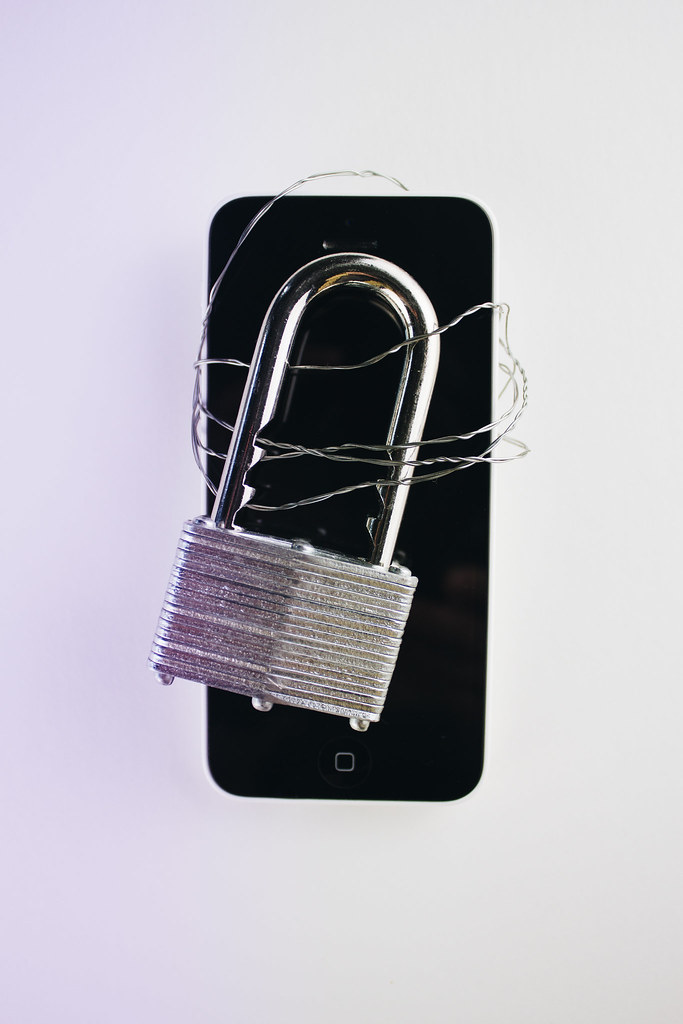
The $74 Billion Ransomware Prediction: Why the Next Wave Hits Harder
New data shows ransomware damage costs are projected to reach $74B by 2026, driven by AI-powered attacks and critical infrastructure breaches.

In early 2026, a regional healthcare network in the U.S. Midwest discovered that attackers had encrypted patient records, surgical schedules, and lab results across three hospitals. The ransom demand was $4.5 million. But the real cost—lost patient trust, regulatory fines, emergency IT overhauls, and weeks of diverted staff—pushed the total past $50 million. That single incident is a microcosm of a global trend: ransomware damage is on track to cost the world $74 billion in 2026, according to Cybersecurity Ventures. That figure is not a scare headline; it is the result of compounding factors that make ransomware more destructive, more frequent, and harder to stop than ever before.
Why the Number Keeps Rising
The $74 billion projection covers more than ransom payments. It includes downtime, data restoration, legal fees, reputation damage, and lost business. In 2021, the same firm estimated global ransomware costs at $20 billion. By 2024, that had more than doubled. The jump to $74 billion by 2026 reflects a structural shift: ransomware is no longer a nuisance for small businesses—it is a systemic risk for hospitals, energy grids, and government agencies.
A key driver is the weaponization of artificial intelligence. According to Verizon's 2026 Data Breach Investigations Report, cited by the World Economic Forum, hackers are increasingly using AI to detect software vulnerabilities faster than defenders can patch them. AI-powered phishing campaigns can now craft convincing emails in seconds, targeting specific employees with personal details scraped from social media. This lowers the barrier to entry for attackers and increases the success rate of initial breaches.
The New Attack Playbook: Double Extortion and Triple Threats
Traditional ransomware encrypted files and demanded payment for the decryption key. Today, attackers exfiltrate sensitive data before encrypting it, then threaten to leak it publicly if the ransom is not paid. This "double extortion" model has become standard. A 2025 attack on a European logistics firm saw attackers steal shipping manifests and customer contracts, then encrypt the entire database. The company paid the ransom—only to discover the attackers had retained copies and demanded a second payment six months later.
Even more alarming is the rise of "triple extortion," where attackers also target customers or partners with threats of data exposure. This amplifies the damage far beyond the initial victim. For example, a breach at a cloud service provider in early 2026 exposed data from over 1,800 downstream clients, each of which faced separate extortion demands. The cascading costs—legal fees, notification requirements, and lost business—multiplied the original incident's impact by a factor of ten.
Real-World Breach: The Healthcare Network That Lost $50 Million
To understand why projections are soaring, look at the healthcare breach mentioned earlier. In February 2026, a mid-sized hospital network in the United States was hit by ransomware that exploited a known vulnerability in its scheduling software—a flaw that had been patched three months earlier but never applied. The attackers, likely using an AI tool to scan for unpatched systems, gained access through a single forgotten server. Once inside, they moved laterally for six days before deploying encryption.
The immediate costs were staggering: $4.5 million ransom, $12 million in emergency IT contracts, $8 million in lost revenue from canceled procedures, and $25 million in estimated regulatory fines and class-action settlements. The U.S. Department of Health and Human Services reported the breach as one of the largest of the year, affecting at least 1.8 million patients. This single incident contributed roughly 0.07% of the projected $74 billion total. Multiply that by hundreds of similar attacks globally, and the math becomes sobering.
The Role of Human Error and AI-Powered Phishing
SentinelOne's 2026 data breach statistics identify ransomware, human error, and AI-powered phishing as the top three causes of breaches. Human error remains stubbornly common: an employee clicks a malicious link, uses a weak password, or fails to update software. But AI is making these errors more costly. Attackers now use generative AI to create phishing emails that mimic a CEO's writing style, complete with recent company jargon and internal project names. A single click can give attackers a foothold in a network that took years to secure.
At the same time, AI is helping defenders. Modern endpoint detection tools use machine learning to spot anomalous behavior—such as a sudden spike in file encryption—and isolate affected systems in milliseconds. But the arms race is asymmetrical: attackers only need to succeed once; defenders must succeed every time.
Why Ransomware Is a Business Problem, Not Just an IT Problem
The $74 billion figure is often discussed in cybersecurity circles, but its implications extend to every executive. A ransomware attack can halt manufacturing lines, freeze financial transactions, or shut down hospital emergency rooms. The average downtime after a ransomware attack is now 21 days, according to industry studies. For a mid-sized company, that can mean permanent loss of market share, customer churn, and even bankruptcy.
Boards of directors are increasingly being held personally liable for inadequate cybersecurity. In 2025, the U.S. Securities and Exchange Commission fined several companies for failing to disclose ransomware incidents in a timely manner. Shareholders have filed lawsuits alleging that executives knew about vulnerabilities but did not fix them. The cost of ransomware is no longer just a line item in the IT budget—it is a strategic risk that affects stock prices, insurance premiums, and regulatory compliance.
Looking Ahead: Can We Bend the Curve?
Projecting $74 billion in damages for 2026 is not inevitable. Several promising trends could slow the growth. Cyber insurance companies are now requiring minimum security standards—such as multi-factor authentication and offline backups—before issuing policies. Governments are mandating incident reporting within 24 hours, which helps track attackers faster. And international law enforcement agencies have disrupted several major ransomware gangs in coordinated takedowns.
But the fundamental challenge remains: ransomware is profitable, low-risk, and increasingly automated. As long as there are unpatched systems, untrained employees, and a willingness to pay ransoms, attackers will keep innovating. The $74 billion projection is a warning, not a prediction. It is a number that can change if organizations treat cybersecurity as a core business function—not an afterthought. The hospitals, logistics firms, and cloud providers hit in 2025 and 2026 learned that lesson the hard way. For everyone else, the time to prepare is now.