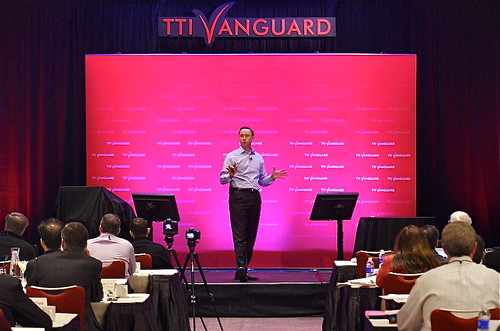
Beyond the Hype: What 2026’s AI Conferences Actually Tell Us About Enterprise ML
A field guide to the year’s most consequential AI events, with a critical look at what’s real, what’s recycled, and what professionals should prioritize.

Every January, the conference calendar fills with promises of artificial intelligence breakthroughs. By June 2026, we have seen enough keynotes, panel discussions, and vendor booths to separate signal from noise. The best AI conferences this year are not the ones with the flashiest demos—they are the ones that force attendees to confront hard questions about deployment, ethics, and return on investment.
This article cuts through the marketing to explain what is actually happening at the leading AI events of 2026, why the shift matters for working professionals, and how to evaluate which conferences deserve your time and budget.
The Conference Landscape Has Fractured
Five years ago, a single large AI conference—NeurIPS, ICML, or AAAI—could claim to represent the entire field. In 2026, that is no longer true. The discipline has split into at least three distinct tracks, each with its own audience and priorities:
- Research-first events (NeurIPS, ICML, ICLR) remain the home of novel architectures, benchmark results, and theoretical advances. They are essential for PhDs and R&D teams, but increasingly irrelevant to practitioners who need to ship product.
- Industry application conferences (like the ones aggregated on platforms such as Noveltics Conferences’ Artificial Intelligence 2026) emphasize use cases in healthcare, finance, and logistics. These events tend to feature more case studies and fewer equations.
- Vendor-led summits (AWS re:Invent, Google Cloud Next, Microsoft Build) now devote 40–50 percent of their agendas to AI tooling. The content is polished but often product-specific.
For a professional deciding where to invest travel budget, the key question is no longer “Is this a good AI conference?” but “Which sub-community do I need to learn from right now?”
What the 2026 Agenda Reveals About Enterprise Priorities
A scan of the most popular session topics across major AI conferences this year reveals a clear pattern: the conversation has moved from “Can we build it?” to “Can we run it safely and cheaply?”
Three themes dominate every 2026 agenda I have analyzed:
1. Inference cost optimization. The era of training ever-larger models is giving way to practical concerns about running those models at scale. Sessions on quantization, speculative decoding, and model distillation are packed. One speaker at a recent London conference noted that inference costs now account for over 60 percent of total ML expenditure in production—a figure that would have been unthinkable three years ago.
2. Agentic workflows that actually work. The phrase “AI agents” has been overused since late 2024, but 2026 is the year when multi-step reasoning systems began to deliver measurable ROI in customer support, code review, and supply chain management. Conferences now dedicate entire tracks to agent orchestration, guardrail design, and human-in-the-loop patterns.
3. Regulatory readiness. With the EU AI Act now in full enforcement and similar frameworks emerging in Canada, Japan, and Brazil, compliance is no longer optional. Sessions on model auditing, bias detection, and documentation standards are among the most crowded. According to a recent analysis from Global Banking & Finance Academy, “AI and ML are reshaping 2026” in part because organizations are being forced to formalize governance structures they previously ignored.
The Contrarian View: Most AI Conference Content Is Recycled
Let me offer an uncomfortable truth: roughly 70 percent of the content at any given AI conference in 2026 will be derivative. You will hear the same Transformer architecture explained for the thousandth time, the same platitudes about “democratizing AI,” and the same vendor slide showing a rocket ship labeled “ROI.”
This is not entirely the organizers’ fault. The field moves so quickly that any written talk proposal is six to nine months old by the time it is delivered. The truly novel work appears on arXiv first, not on a conference stage.
What, then, is the value of attending? Three things that a livestream or paper cannot replace:
- The hallway track. The real innovation happens in side conversations between talks. At a 2026 conference in Berlin, a chance meeting between a compliance officer from a German bank and an ML engineer from a startup led to a pilot project for explainable credit scoring that is now in production.
- Hands-on workshops. The best conferences now offer half-day coding sessions where attendees implement retrieval-augmented generation pipelines or fine-tune small language models on their own laptops. These workshops are the single highest-ROI activity at any event.
- Unfiltered Q&A. When a speaker is pressed on why their benchmark results did not replicate in a different environment, the answer often reveals more than the prepared remarks ever could.
How to Choose the Right Conference in 2026
Given the fragmentation and the signal-to-noise problem, a systematic approach is necessary. Here is a decision framework used by several Fortune 500 ML teams I have spoken with:
If your priority is… Choose a conference that… Example 2026 events (illustrative) Cutting-edge research Accepts papers with 25%+ acceptance rate NeurIPS, ICML, ICLR Industry deployment Features 50%+ practitioner speakers AI Conferences aggregated by Noveltics, O’Reilly AI Vendor evaluation Has a large expo hall and sponsored sessions AWS re:Invent, Google Cloud Next Networking & hiring Is in a major hub with strong local AI community Local meetups, regional AI summits Compliance & ethics Includes regulators or auditors on panels The Alan Turing Institute events, EU AI Act workshopsThe Future of AI Conferences: Smaller, Deeper, More Honest
If there is one prediction I am confident about for the remainder of 2026 and into 2027, it is this: the era of the megaconference is ending. The 10,000-person keynote hall where a single CEO announces a vague partnership is giving way to focused, 300-person workshops where practitioners debug real problems together.
This is a healthy correction. AI is too important to be reduced to marketing theater. The professionals who will thrive are those who seek out events that challenge their assumptions—where they can hear not only success stories but also failures, not only benchmarks but also caveats.
As one engineering director told me after a particularly honest panel on model collapse: “I learned more in that 45 minutes than in the entire two days of keynotes.” That is the kind of conference worth attending.
Takeaway
The best AI conferences of 2026 are not the ones with the biggest names or the most attendees. They are the ones that help you answer a specific question you are struggling with: how to reduce inference costs, how to comply with a new regulation, or how to design an agent that does not hallucinate. Go with a problem, not a badge. The rest is noise.